Thursday, January 9, 2014
The Interviews.....
Military deployment does not only affect the service member but the family as well. For the course project, I selected Kimberly Casto, a Navy wife, and Valentina Kennedy, a professional school counselor, to interview. Mrs. Casto has been married to her husband, Douglas Casto for twenty years. Douglas Casto serves the country in the U.S. Navy. Nine years ago, Mr. Casto was deployed for nine months on a Mediterranean Cruise while Mrs. Casto raised their twin children. Mrs. Kennedy is a professional school counselor for Charles County Public Schools. She has worked for nine years at school near a naval station. During her tenure, she has counseled students about parental deployment through group and individual sessions. She has counseled parents during pre-deployment and post-deployment and provided community resources to families.
I conducted both interviews on Wednesday, January 8th. I conducted a phone interview with Mrs. Kennedy. I have never personally met Mrs. Kennedy; however, she was recommended to me from my professional school counselor. I emailed her the questions prior to the interview, so she was familiar with them. Since she was familiar with the questions, there was not a lot of down time as she formulated her answers. The interview lasted approximately thirty minutes. After school, I interviewed Mrs. Casto in person. At the beginning of the interview, my instructional assistant and her son were leaving. Mrs. Casto made a few comments about their relationship which led into a discussion about previous relationships. After the small talk was completed, I began the interview. I did not provide her with the questions prior to the interview, but she easily answered the questions. The interview lasted approximately 40 minutes. During the interview, I interjected my experiences which I did not do the previous interview . Was this interview more relaxed due to the fact that I work with her or was it due to the fact that the interview was with a co-worker? It was probably a combination of the both.
Question: During both interviews, I had generated questions that did not easily follow the response from the previous question. Sometimes, I was able to generate follow-up questions while other times, I stated the next question on the list. While determining which action to take, there was an awkward silence. Did anyone have similar experiences? How did you handle it?
Key Point: A key point from the interviews, Mrs. Casto said, "Some people aren't programmed for being a military spouse." When I asked her to elaborate, she stated, "A military wife needs to be strong, to be able to care for yourself, to trust their spouse, be loyal, and don't believe everything you hear." She followed-up her response with advice from her mother who was a military wife as well: trust in your husband, trust in God and you'll be fine.

Thursday, November 28, 2013
We're in the Army NOW!
Left, left right, left.. left, left, left right...These are the marching orders of the military. However, the military is more than just following orders.
The military serves our country in war and peace. In 2011, the U.S. military included over 1.4 million men and women, and 71% of them had children (Hanson and Lynch, 2013, p. 9). When one serves in the military, the entire family serves. Living and working near Andrews Air Force Base, Patuxent River Naval Air Station and Indian Head Naval Surface Warfare Center, military families are prevalent. However with minimal interactions leaves one wondering is there really a difference between civilian and military families?
Does military culture influence family dynamics off the base? How does deployment effect children's development? How does relocation affect families and children? Does this affect children's ability to make and keep friends? What strategies do early childhood professionals need to utilize to support child development?
Reference:
Hanson, M. J.,
& Lynch, E. W. (2013). Understanding families: Approaches to diversity,
disability, and risk. Baltimore,
MD: Paul H. Brookes Publishing Co.
Wednesday, June 19, 2013
Our Children Are Suffering
With just one small voice
Singing out a song
With just one small voice
Singing sweet and strong
One by one they’ll grow
And together sing along
And then soon all the world
Will be singing
Singing out a song
With just one small voice
Singing sweet and strong
One by one they’ll grow
And together sing along
And then soon all the world
Will be singing
With just one small voice
Singing out a song
With just one small voice
Singing sweet and strong
One by one they’ll grow
And together sing along
And then soon all the world
Will be singing
Singing out a song
With just one small voice
Singing sweet and strong
One by one they’ll grow
And together sing along
And then soon all the world
Will be singing
Listen as children sing Jack Hartmann's "One Small Voice"
http://www.youtube.com/watch?v=AZ07PJpXBvg
A month ago, I heard this song for the first time, I was moved to tears. Children throughout the world have one small voice. It is our job as early childhood professionals to listen to that "small voice", to nurture that "small voice", to support that "small voice." We are the voice for the voiceless in the world. We need to be the agent of change for the children and the world's future.
A month ago, I heard this song for the first time, I was moved to tears. Children throughout the world have one small voice. It is our job as early childhood professionals to listen to that "small voice", to nurture that "small voice", to support that "small voice." We are the voice for the voiceless in the world. We need to be the agent of change for the children and the world's future.

Just as a child has one "small voice," when an agent of change works by themselves, their voice is small. However, Gonzalez-Mena stated, “We need one on one relationship’s and become a community and when we are a community we can make a lot of difference”(Laureate Education, Inc., 2013h).

It is time to lay down our differences. Time to get rid of the "baggage" that will hinder change. Our children are suffering. Children do not have adequate and clean drinking water. Our children are suffering. Children do not have adequate and healthy food. Our children are suffering. Children are living in unsanitary conditions. Our children are suffering. Children are living in broken homes. Our children are suffering.
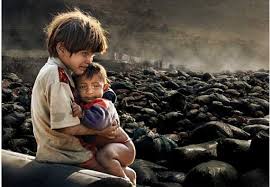
The children are suffering. Politicians can't agree. Communities and schools don't see eye to eye, so nothing happens. Things are stagnant, and the children are suffering.

Every child in every nation deserves a childhood full of hope, joy, freedom, and promises for the future (Association for Childhood Education International, 2011a). After 16 weeks of delving into culture and exploring early childhood issues on a global perspective, the course is coming to the end; however, the journey will continue. So my question is what's next?
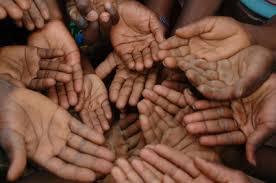
Let these images resonate in your mind, and then cause you to get involved. When we work together to make a change, we are no longer a "small voice," but a boisterous voice crying out on behalf of the children.
References:
Association for Childhood Education International (2011a). The decade for childhood 2012-2022. Retrieved from http://www.acei.org/acei-statements/the-decade-for-childhood-2012-2022.html
Laureate Education, Inc. (Executive Producer). (2013h). Introduction to global perspectives on development and learning. [Video]. Baltimore, MD: Author.
The children are suffering. Politicians can't agree. Communities and schools don't see eye to eye, so nothing happens. Things are stagnant, and the children are suffering.
Every child in every nation deserves a childhood full of hope, joy, freedom, and promises for the future (Association for Childhood Education International, 2011a). After 16 weeks of delving into culture and exploring early childhood issues on a global perspective, the course is coming to the end; however, the journey will continue. So my question is what's next?
Because "We Are the World"
Let these images resonate in your mind, and then cause you to get involved. When we work together to make a change, we are no longer a "small voice," but a boisterous voice crying out on behalf of the children.
References:
Laureate Education, Inc. (Executive Producer). (2013h). Introduction to global perspectives on development and learning. [Video]. Baltimore, MD: Author.
Subscribe to:
Posts (Atom)